Author Archives: Kristen Tutas

About Kristen Tutas

Kristen Tutas is a Florida-licensed real estate broker with Vacation Club Life, a family-owned brokerage specializing in Disney Vacation Club (DVC) resales since 1998. Working in the DVC resale industry since 2011, Kristen brings firsthand expertise in resale pricing, market trends, and the buying and selling process. As a DVC owner herself, she combines personal experience with actual resale transaction data to help DVC owners make informed decisions.
  1. Why Some DVC Contracts Sell Faster Than Others

    Comments Off on Why Some DVC Contracts Sell Faster Than Others

    Updated November 17, 2026

    Every Disney Vacation Club owner considering selling eventually asks the same question: How long will it take to sell my DVC contract?

    Some DVC contracts receive offers within days, while others remain on the market for weeks or months. The difference often comes down to asking price, home resort, contract size, available points, and how much competing inventory buyers have to choose from.

    A competitively priced DVC contract with desirable characteristics will generally attract buyers faster than a similar contract priced above current market expectations. However, even contracts at the same resort can experience very different selling timelines.

    Understanding what buyers look for, and how your contract compares to other available listings, can help you establish a realistic asking price and improve your chances of finding a buyer.

    How Long Does It Typically Take to Sell a DVC Contract?

    The time it takes to sell a Disney Vacation Club contract depends on the resort, asking price, contract size, available points, and current market demand.

    Some contracts receive offers within the first week, while others may take several months to attract the right buyer.

    It’s also important to distinguish between two different timelines:

    • Time to find a buyer: The period between listing a contract and accepting an offer.
    • Time to close: The period after an offer is accepted, which includes Disney’s Right of First Refusal (ROFR) process, title work, and final closing.

    At Vacation Club Life, recent transactions have averaged approximately 35–40 days from accepted offer to closing. This is separate from the time a contract spends actively listed for sale.

    Pricing your contract competitively from the beginning can help reduce the time spent waiting for an offer.

    Similar Contracts Can Still Perform Differently

    DVC contracts are defined by several characteristics, including the home resort, point total, Use Year, available points, expiration date, and asking price. Some contracts may be nearly or completely identical, while others differ in ways that significantly affect buyer interest.

    A buyer looking for a 50-point add-on may have little interest in a 300-point contract, even when the larger contract has a lower price per point. Another buyer planning longer annual vacations may prefer the larger contract because it better matches the number of points they expect to use.

    Even two contracts at the same resort can attract different levels of interest if one includes banked points, has a more manageable total purchase price, or is priced more competitively against current inventory. When contracts are truly comparable, small differences in price, point availability, or timing can determine which one sells first.

    This is why broad statements such as “BoardWalk is selling quickly” or “Riviera is moving slowly” only explain part of the market. Resort demand matters, but buyers ultimately compare each listing against the other contracts available at that time.

    Resort Demand Sets the Foundation

    The resort remains one of the biggest drivers of buyer interest.

    Some Disney Vacation Club resorts consistently generate strong demand because of their location, amenities, or limited resale inventory. Resorts such as Grand Floridian, Polynesian, Beach Club, and BoardWalk often attract buyers who have been waiting specifically for those home resorts.

    When inventory is limited, well-priced contracts can sell very quickly.

    Other resorts may have larger inventories or appeal to a narrower group of buyers. That does not make them undesirable. It simply means buyers usually have more options available and may take longer to make a decision.

    Demand also changes over time. New resort announcements, renovations, point chart adjustments, annual dues, and overall inventory levels can all influence buyer activity throughout the year.

    Contract Size Often Matters More Than Sellers Expect

    One of the most overlooked factors affecting marketability is contract size. Many first-time buyers enter the resale market looking for memberships between 100 and 200 points because those contracts provide enough points for most annual vacations while keeping the purchase price manageable.

    Smaller contracts, particularly those under 100 points, often generate significant interest because they represent a lower overall investment. They are also popular with existing members who simply want to add a few more points to their membership.

    Larger contracts appeal to a much smaller audience. While they offer a lower price per point in many cases, the total purchase price is substantially higher. Fewer buyers have the budget or vacation needs for memberships containing 300, 400, or even 500 points.

    Available Points Can Add Significant Value

    Not every DVC point has the same immediate value. Buyers carefully examine how many points are available for upcoming vacations, whether any points have been banked, and whether future points have already been borrowed. A contract with current or banked points may offer immediate vacation value, while a contract with depleted or borrowed points may require the buyer to wait before receiving a full annual allotment.

    For example, imagine two 150-point contracts at the same resort with identical asking prices. One contract has only next year’s points remaining. The other includes 150 points that have been banked into the following Use Year, giving the buyer access to 300 usable points shortly after closing. Even though the contracts appear identical at first glance, many buyers would consider the second contract significantly more valuable.

    Borrowed points create the opposite situation. When future points have already been used, buyers recognize they may need to wait longer before enjoying the full annual benefits of ownership. This is one reason experienced buyers look beyond the asking price before deciding which contract represents the better overall value.

    Use Year Is About Timing, Not Quality

    Many sellers mistakenly believe certain Use Years are inherently more valuable than others. In reality, a Use Year simply determines when a member receives their annual allotment of points. The “best” Use Year depends almost entirely on when the owner typically travels and how they expect to use their membership.

    Someone who usually vacations during the summer may benefit from a different Use Year than someone who almost always visits during the winter holidays. Neither Use Year is universally better. The right choice depends on the individual owner’s travel patterns and how they plan to bank or borrow points.

    There is another factor that occasionally influences buyer demand. Disney did not allocate the same number of points to every Use Year at every resort. Some Use Years are more common than others, while certain months may have relatively few contracts available. As a result, buyers looking for a specific Use Year sometimes have fewer options to choose from, particularly at resorts with limited resale inventory.

    Existing Disney Vacation Club members also frequently try to match the Use Year they already own. Keeping multiple contracts under the same Use Year simplifies banking, borrowing, and managing points. For those buyers, finding a matching Use Year can be more important than securing the absolute lowest purchase price.

    For sellers, Use Year rarely determines whether a contract will sell. Instead, it influences which buyers are most likely to pursue that particular contract. A matching Use Year may make a listing especially appealing to one buyer, while another buyer may focus on entirely different characteristics.

    Expiration Date Matters More at Some Resorts

    Remaining years of ownership influence long-term value. Older Disney Vacation Club resorts expire in 2042, while many newer resorts extend to 2064, 2066, or beyond.

    Buyers naturally compare how many years of vacations remain before the membership expires.

    At Disney’s Old Key West, for example, both 2042 and 2057 expiration memberships exist. Buyers often evaluate these contracts differently because the extended expiration provides an additional fifteen years of ownership.

    The price difference between the two reflects more than simply demand. Buyers are purchasing additional years of vacation opportunities.

    Annual Dues Affect Long-Term Affordability

    The purchase price is only part of the ownership cost. Annual dues continue for as long as the membership is owned, making them an important consideration during the buying process. Two contracts with similar purchase prices may have very different long-term costs depending on the resort’s annual dues.

    Many experienced buyers calculate both the initial purchase price and the ongoing yearly expense before deciding which contract offers the better overall value. For this reason, annual dues often influence buyer decisions even when they are not the primary factor.

    Inventory Changes Buyer Behavior

    Market conditions matter just as much as contract characteristics. When only a handful of contracts are available at a particular resort, buyers often act quickly because another opportunity may not appear for weeks.

    Conversely, if dozens of similar contracts are available, buyers can afford to be more selective. They may negotiate more aggressively or simply wait for another listing.

    Inventory levels change throughout the year. A contract that attracts little attention during a period of high inventory may receive multiple offers several months later after competing listings have sold. This is one reason pricing strategies should always consider current market conditions rather than historical sales alone.

    During the third quarter of 2026, the DVC resale market had fewer than 800 available listings overall. However, limited inventory didn’t necessarily mean faster sales at every resort. Our 3rd Quarter 2026 DVC Resale Market Report examines these differences using actual completed transactions through Vacation Club Life.

    The Role of Asking Price in Buyer Interest

    Asking price is one of several factors that can influence how quickly a DVC contract attracts an offer, but it’s not always the deciding factor.

    Buyers compare contracts based on resort, point availability, contract size, Use Year, and price. A contract that meets a buyer’s specific needs may sell quickly, even when other similar listings have been available longer.

    Competitive pricing can help attract attention, while an asking price significantly above comparable listings may limit buyer interest. However, even a well-priced contract can take time to find the right buyer.

    At Vacation Club Life, we consider both recent completed resale transactions and current competing listings when recommending an initial asking price. Our goal is to position each contract appropriately based on its individual characteristics and market conditions.

    Learn more about the difference between DVC asking prices and actual selling prices.

    Understanding Value Is the First Step Toward a Successful Sale

    Determining how quickly a contract may sell requires looking beyond price alone.

    Available points, contract size, resort demand, inventory levels, expiration date, annual dues, and current buyer activity all influence how attractive a listing appears in today’s resale market.

    Evaluating those factors together provides a much clearer picture of where a contract fits within the current market and helps sellers make informed pricing decisions from the beginning.

    If you’re considering selling, understanding what determines your DVC contract’s value and reviewing a current market analysis are natural next steps.
  2. What Makes a DVC Contract a Good Deal?

    Comments Off on What Makes a DVC Contract a Good Deal?

    If you spend any time browsing Disney Vacation Club resale listings, you’ll quickly notice one number gets most of the attention: price per point.

    It’s easy to understand why. When dozens of contracts are available, comparing prices seems like the fastest way to determine which one offers the best value.

    But experienced DVC buyers know that the lowest-priced contract isn’t always the best deal.

    In fact, we’ve seen buyers save money in the long run by purchasing a contract that initially looked more expensive. The reason is simple: a DVC contract is more than just its asking price. Available points, annual dues, contract size, home resort, and even the expiration date all play an important role in determining its true value.

    Understanding how these pieces fit together can help you make a smarter purchase and avoid focusing on a single number that only tells part of the story.

    Looking Beyond Price Per Point

    Price per point is a valuable tool because it allows buyers to compare contracts of different sizes. A 100-point contract and a 250-point contract become much easier to evaluate when both are expressed as a cost per point.

    The problem is that price per point doesn’t tell you what you’re actually receiving.

    Imagine two 150-point contracts at the same resort. One is listed for $98 per point, while the other is available for $104 per point. At first glance, the lower-priced contract appears to be the obvious choice.

    Then you discover the higher-priced contract includes this year’s unused points, banked points from the previous year, and annual dues that have already been paid. Suddenly, the extra purchase price may provide enough vacation value to more than offset the difference.

    Without looking beyond the asking price, it’s easy to overlook the better overall value.

    Available Points Can Change Everything

    One of the biggest factors buyers often underestimate is the number of points that come with the contract.

    Some resale contracts include a full allotment of current points that are ready to use immediately. Others may also include banked points from the previous Use Year, giving the buyer enough points to book one or even multiple vacations shortly after closing.

    On the other hand, some contracts have already had their current year’s points used or borrowed. While those contracts can still represent excellent value, they should be evaluated differently because you’ll need to wait before receiving your next allocation of points.

    Two contracts with identical asking prices can provide very different ownership experiences during your first year.

    The Right Home Resort Is Worth More Than You Think

    Many buyers naturally gravitate toward the least expensive resort available.

    Sometimes that’s the right decision. Other times, it leads to disappointment.

    Your home resort gives you the ability to book accommodations there up to eleven months before arrival, several months earlier than owners at other resorts. If you dream of staying at Disney’s Grand Floridian Resort every Christmas, owning at a less expensive resort may not provide the booking advantage you need.

    Likewise, if you’re perfectly happy staying at several different resorts throughout Walt Disney World, paying a premium for a specific home resort may not make sense.

    The best value isn’t always the least expensive resort. It’s the one that best supports the way your family vacations.

    If you’re still deciding where to own, our guide to the best DVC resorts to buy can help you compare each resort’s strengths

    Buying the Right Number of Points

    Contract size is another area where buyers sometimes focus on cost instead of value.

    Smaller contracts require less money upfront and can be an excellent way to begin your DVC ownership journey. They’re also easier to add to later if your vacation habits change.

    Larger contracts, however, often reduce the average cost per point and provide more flexibility when booking longer stays or larger accommodations.

    There’s no universally perfect contract size. The goal is finding one that matches how often you travel, how many people typically vacation with you, and whether you expect those habits to change over time.

    Buying too few points can sometimes be more expensive if you later need to purchase another contract just to meet your family’s needs or have to pay cash for a stay.

    Don’t Forget About Annual Dues

    While buyers naturally focus on the purchase price, annual dues are part of the long-term cost of ownership.

    Every DVC resort has its own dues structure, and those costs continue throughout the life of the contract. A contract with a slightly higher purchase price may actually become the less expensive option over time if it carries lower annual dues.

    Evaluating ownership costs over several years often provides a clearer picture than comparing purchase prices alone.

    Expiration Dates Matter, But Context Matters More

    Every Disney Vacation Club resort has an expiration date, and that remaining ownership term naturally affects value.

    A contract that expires in 2070 provides decades more ownership than one ending in 2042. That additional time is reflected in the market.

    However, a shorter-term contract isn’t automatically a poor purchase. For some buyers, paying significantly less for years of vacations they fully expect to enjoy can make perfect financial sense.

    Rather than asking which expiration date is “best,” it’s more helpful to ask which one aligns with your family’s plans and budget.

    Every Buyer Defines Value Differently

    One of the most interesting aspects of the DVC resale market is that two buyers can evaluate the exact same contract and reach completely different conclusions. A retired couple who travels every September may prioritize low annual dues and flexibility. A young family visiting during school breaks may place much greater value on owning at a resort where booking during busy travel seasons is easier.

    Existing Disney Vacation Club members often have another priority. Many look for contracts with the same Use Year as their current membership, allowing points to be managed together and simplifying banking, borrowing, and vacation planning. Because Disney did not allocate the same number of points to every Use Year at every resort, some Use Years are naturally less common than others. For those buyers, finding the right Use Year may be worth paying a little more or waiting longer for the right contract to become available.

    That’s why there is rarely a single “best” contract. There is only the contract that’s best for you.

    The Best DVC Deal Is Different for Every Buyer

    When we help buyers compare Disney Vacation Club resale listings, we don’t start by looking for the lowest price. Instead, we evaluate the entire package.

    We consider the available points, annual dues, contract size, home resort, expiration date, and, most importantly, how the contract fits the buyer’s vacation goals.

    Sometimes the best value really is the least expensive contract available. Other times, spending a little more upfront results in years of additional flexibility, easier bookings, or immediate vacation opportunities that make it the stronger investment.

    Finding a good deal isn’t about chasing the lowest asking price. It’s about understanding what you’re buying and choosing the contract that delivers the greatest long-term value for the way you vacation.

    Our Experience

    Vacation Club Life has specialized in Disney Vacation Club resales since 1998. Over the years, we’ve helped thousands of buyers and sellers navigate the resale market, giving us firsthand insight into the factors that influence contract value, buyer demand, and long-term ownership.

    Every contract is different, which is why we focus on helping buyers understand the complete picture rather than simply comparing price per point.

    Ready to compare DVC resale contracts?

    Browse our current DVC resale listings or contact us if you’d like help comparing the contracts you’re considering.

  3. Is There an MLS for DVC?

    Comments Off on Is There an MLS for DVC?

    Understanding Where Disney Vacation Club Listings Come From

    If you’ve spent any time searching for Disney Vacation Club resale listings online, you’ve probably noticed something interesting.

    The same contract may appear on multiple websites. Prices, point totals, or availability can sometimes look different from one site to another. And some listings seem to be everywhere at once.

    That often leads buyers to ask:

    “Is there a DVC MLS?”

    The short answer is no.

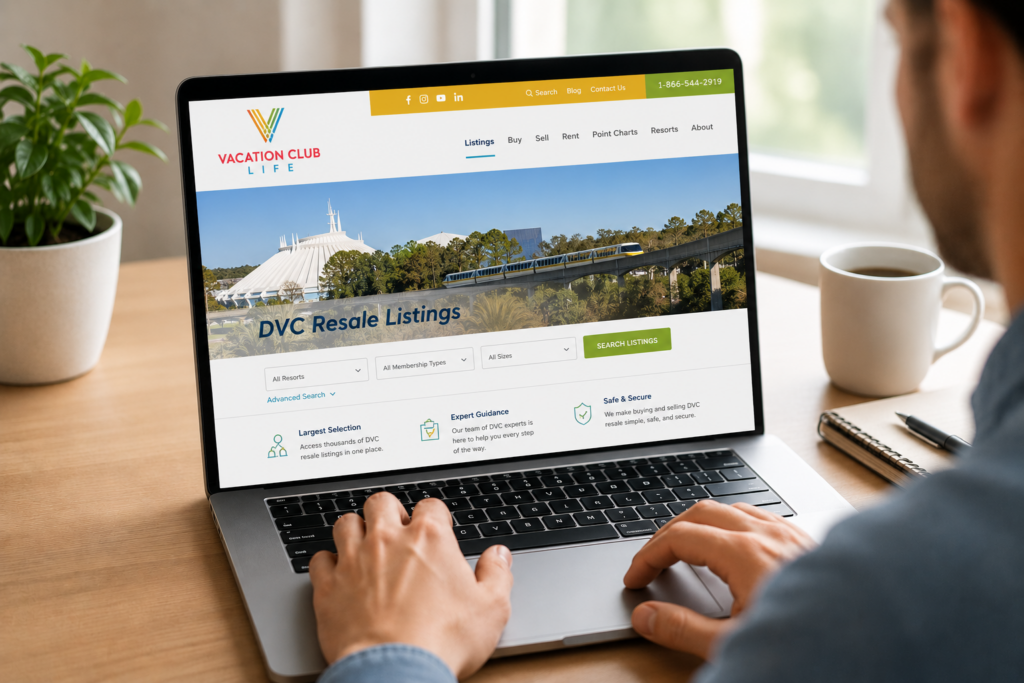
    Unlike traditional residential real estate, there is no centralized Multiple Listing Service (MLS) for Disney Vacation Club resale contracts. Understanding how listings are distributed can help buyers navigate the market more confidently and avoid confusion during their search.

    Laptop screen displays a travel site with a prominent 'DVC Resale Listings' banner and search filters, while a person types on the keyboard.

    What Is an MLS?

    In traditional real estate, an MLS (Multiple Listing Service) is a centralized database where participating brokers share property listings.

    When a home is listed on the MLS, authorized brokers can access the same information, making it easier for buyers and agents to view available properties.

    Property owners also agree to have their homes marketed through the MLS when they sign a listing agreement with their broker. This creates a single, centralized source of listing information that participating brokers can rely upon.

    Disney Vacation Club resale contracts operate differently.

    Unlike traditional real estate, there is no centralized system where all DVC resale listings are collected, maintained, and updated. No single source contains every available Disney Vacation Club resale contract.

    Where Do DVC Listings Come From?

    Every Disney Vacation Club resale contract is listed by an individual brokerage.

    When an owner decides to sell, they typically work with a DVC resale broker who markets the contract to potential buyers.

    In most cases, the owner enters into a listing agreement with that brokerage, authorizing them to market the contract and represent the seller throughout the transaction.

    That brokerage maintains the official listing information, including details such as:

    • Resort
    • Contract size
    • Use year
    • Available points
    • Asking price
    • Current status

    Because each brokerage maintains its own listings, there is no single database where all DVC contracts are entered, updated, and managed. Each broker is responsible for the accuracy and maintenance of the listings they represent.

    Why Do Listings Appear on Multiple Websites?

    Over time, various websites have emerged that collect and display DVC listings from multiple sources.

    These websites may gather information through broker feeds, publicly available listing data, or other methods to create searchable databases for buyers.

    Although a contract may be displayed in multiple places, the listing brokerage is generally the original source of the information being presented. That brokerage is responsible for maintaining the listing and communicating updates when details change.

    While displaying listings across multiple websites can make it easier for buyers to discover available inventory, it can also create challenges when information changes.

    Why Listing Information Can Differ

    DVC listings can change throughout the sales process. Information may be updated to reflect changes such as:

    • Available points
    • Banked or borrowed points
    • Price reductions
    • Pending status
    • Sold status
    • Contract corrections or updates

    When listing information is copied or displayed across multiple websites, updates may not always occur at the same time. As a result, buyers may occasionally encounter:

    • Different point totals on different websites
    • Contracts that appear available but are already under contract
    • Outdated pricing information
    • Missing details about point availability

    In many cases, these differences simply reflect updates being made at different times.

    Why Buyers Should Verify Information with the Listing Broker

    When evaluating a DVC resale contract, it’s always a good idea to verify important details directly with the listing brokerage.

    Because listing information can change throughout the sales process and may appear on multiple websites, confirming details with the source can help ensure you’re working with the most current information available before making an offer.

    Does Disney Provide a Central DVC Resale Marketplace?

    No. Disney Vacation Club does not operate a centralized resale marketplace where all resale contracts are listed.

    Buyers shopping on the resale market are generally viewing inventory offered through independent brokerages and listing platforms.

    Because there is no centralized marketplace, inventory can appear fragmented across multiple websites.

    Tips for DVC Buyers

    If you’re actively searching for a Disney Vacation Club contract, consider these best practices:

    Verify Important Details

    Before making an offer, confirm important contract details with the listing brokerage. This can help ensure you’re working with the most current information available.

    Understand That Listings Can Change

    Point availability, pricing, and contract status can change throughout the sales process. Information displayed on different websites may not always update at the same time.

    Stay Informed

    Because there is no centralized DVC MLS, inventory is spread across multiple brokerages. Subscribing to broker listing alerts or email updates can help you keep track of new contracts and price changes as they occur.

    The Bottom Line

    There is no official DVC MLS. Disney Vacation Club resale listings originate with individual brokerages and may be displayed across multiple websites. While these websites can help buyers discover available inventory, information can occasionally vary as listings are updated throughout the sales process.

    For the most accurate and up-to-date information, buyers should verify important contract details directly with the listing brokerage before making a purchasing decision.

    Understanding where DVC listings come from can help buyers make more informed decisions and avoid confusion when comparing contracts across multiple websites.

    At Vacation Club Life, we believe informed buyers make better decisions. If you have questions about a specific listing or would like help understanding your options, our team is happy to help.

    Browse Current DVC Listings

    Ready to start your search? Browse our current Disney Vacation Club resale listings or contact our team for assistance finding the right contract for your vacation goals.


    Frequently Asked Questions (FAQ)

    Is there an MLS for DVC?

    No. Disney Vacation Club resale contracts are not listed in a centralized MLS system. Instead, listings are maintained by individual brokerages that represent sellers.

    Why do I see the same DVC contract on multiple websites?

    Many websites display DVC listings from various sources. As a result, the same contract may appear on multiple websites even though it is listed by a single brokerage.

    Does Disney operate a DVC resale marketplace?

    No. Disney does not operate a centralized marketplace for DVC resale contracts. Buyers searching the resale market are typically viewing listings offered through independent brokerages.

    Which source has the most current DVC listing information?

    The listing brokerage is typically the best source for current information about a contract. Because listings can change over time and may appear on multiple websites, buyers should verify important details with the listing broker before making an offer.

  4. What Happened to DVC Prices Over the Last 35 Years?

    Comments Off on What Happened to DVC Prices Over the Last 35 Years?

    When Disney Vacation Club first launched in the early 1990s, few owners were thinking about resale value. Most families joined for one simple reason: they wanted a better way to vacation at Disney for years to come.

    Back then, Old Key West, the original Disney Vacation Club resort, sold for around $51 per point directly through Disney. At the time, that still felt like a major purchase for many families.

    More than 30 years later, many of those same contracts are still actively being bought and sold on the resale market today.

    Old Key West

    The Early Days of Disney Vacation Club

    Disney Vacation Club officially began sales for what is now Disney’s Old Key West Resort on October 7, 1991.

    Pre-construction pricing reportedly started around $48 per point with a 230-point minimum purchase requirement. By the time the resort opened later that year, pricing had already increased to $51 per point.

    As Disney Vacation Club expanded throughout the 1990s and early 2000s, new resorts continued to join the program at prices that may seem surprisingly low by today’s standards.

    • Old Key West opened in 1991 at approximately $51 per point, with some pre-construction buyers paying as little as $48 per point.
    • Disney’s Vero Beach Resort opened in 1995 when direct pricing was approximately $62.75 per point
    • BoardWalk Villas and Disney’s Hilton Head Island Resort both opened in 1996 at roughly the same pricing level.
    • Disney’s Wilderness Lodge Villas debuted in late 2000 with sales beginning around $67 per point before increasing to $72 per point shortly thereafter.
    • Beach Club Villas began sales in 2002 at $80 per point.

    For many longtime owners, these numbers are a reminder of just how early they joined Disney Vacation Club’s story.

    Vero Beach and Hilton Head: Expanding Beyond Walt Disney World

    After the success of Old Key West, Disney Vacation Club took a different approach with its next resorts.

    Disney’s Vero Beach Resort opened in 1995, followed by Disney’s Hilton Head Island Resort in 1996. Both entered the market when Disney Vacation Club pricing was approximately $62.75 per point.

    For the first time, Disney was offering members vacation destinations outside of Walt Disney World. These resorts gave owners a different way to use their membership. Instead of planning trips around theme parks, members could enjoy beach vacations, golf, relaxation, and a slower pace while still remaining within the Disney Vacation Club program.

    While these resorts have generally followed a different resale path than many Walt Disney World properties, they continue to attract a loyal buyer base.

    Old Key West: From the Beginning to Today’s Market

    Old Key West may be one of the most interesting long-term examples in DVC history.

    An owner purchasing during the original pre-construction phase around $48 per point — or shortly after opening around $51 per point — likely never imagined their membership would still be part of the Disney Vacation Club story more than three decades later.

    For many original owners, Old Key West represents more than a contract. It represents decades of family vacations, favorite traditions, and memories made across multiple generations.

    Some of the families who purchased in the early 1990s are now traveling with children and grandchildren who weren’t even born when they first joined Disney Vacation Club.

    While every contract is different, most Old Key West contracts still sell today for more than their original purchase price from the 1990s. Factors such as contract expiration date, available points, and contract size all influence value, but for many longtime owners, the idea that a membership purchased more than 30 years ago still has meaningful resale value comes as a surprise.

    Curious what your contract may be worth today? Request a complimentary market analysis to see recent comparable sales and current market trends.

    BoardWalk Villas and the Growth of DVC

    When BoardWalk Villas opened in 1996, Disney Vacation Club was still a relatively young program.

    Unlike Old Key West, which introduced members to the concept of Disney vacation ownership, BoardWalk helped demonstrate how DVC could expand into some of Walt Disney World’s most desirable locations.

    The ability to walk to EPCOT and Disney’s Hollywood Studios created a completely different ownership experience, and many members quickly embraced the convenience of staying in the heart of the action.

    For longtime owners, BoardWalk represents a period when Disney Vacation Club was rapidly evolving, adding new resorts and giving members more ways to vacation while remaining part of the same program.

    Its location remains one of the resort’s greatest strengths and a key reason it continues to be highly sought after.

    Beach Club Villas and a New Era for DVC

    By the time Beach Club Villas began sales in 2002 at $80 per point, Disney Vacation Club had already established itself as a successful vacation ownership program.

    Beach Club brought something different to the growing portfolio. With its smaller size, access to Stormalong Bay, and prime location near EPCOT’s International Gateway, it quickly developed a loyal following among members.

    Many owners who purchased during this era were no longer early adopters of a new concept. They were joining a program that had already proven itself over the previous decade.

    Today, Beach Club remains one of Disney Vacation Club’s most sought-after resorts, illustrating how some of the program’s early properties have maintained their appeal across multiple generations of owners and buyers.

    Why DVC Has Behaved Differently Than Traditional Timeshares

    One reason many longtime owners are surprised by today’s resale market is because Disney Vacation Club has historically followed a different path than many traditional vacation ownership products.

    Over the years, Disney continued adding new resorts, direct prices steadily increased, and new buyers continued entering the market. Combined with strong brand loyalty and the unique advantages of home resort ownership, those factors helped create an active resale market that continues today.

    That doesn’t mean every contract increased in value or that every resort performed the same. But compared to what many people expected from vacation ownership in the 1990s, Disney Vacation Club has remained remarkably resilient.

    Many Original Owners Are Entering a New Stage

    Today, many original DVC owners are entering a different season of ownership. Some still travel every year and continue using their membership exactly as they always have. Others now travel less often, have changing family dynamics, or simply find they are using fewer points than they once did.

    For some owners, the biggest surprise isn’t how much Disney Vacation Club has changed over the last 35 years. It’s discovering that a membership purchased decades ago may still represent a meaningful asset today. Selling becomes less about “getting rid of a timeshare” and more about evaluating the ownership they have enjoyed for many years.

    Curious What Your DVC Contract May Be Worth Today?

    Contract values today can vary significantly based on factors like:

    • Resort
    • Expiration date
    • Available points
    • Annual dues
    • Contract size
    • Current buyer demand

    Get Your Free Market Analysis

    Some owners are simply curious how today’s market compares to when they originally purchased. Others may be considering downsizing, traveling differently, or exploring whether selling makes sense for their family.

    If you’d like to better understand what your contract may be worth in today’s resale market, our team is always happy to provide a complimentary market analysis with recent comparable sales and current market trends.

    Looking Back at More Than 30 Years of DVC

    Very few people purchased Disney Vacation Club in 1991 expecting to still be talking about resale value in 2026. Most simply wanted Disney vacations with their family.

    Few owners purchased Disney Vacation Club expecting their membership to remain relevant more than three decades later. Yet for many families, those original purchases continue to be part of their vacation story today.

    And for owners who have not looked at the market in years, today’s numbers may be worth a second look.

  5. When Is the Right Time to Sell Your Disney Vacation Club Membership?

    Comments Off on When Is the Right Time to Sell Your Disney Vacation Club Membership?

    For many Disney Vacation Club owners, the decision to sell isn’t just financial – it’s emotional.

    DVC ownership often represents years of family memories: walking down Main Street at night, celebrating anniversaries at EPCOT, or introducing the next generation to their first Disney vacation. But as life changes, priorities shift, and travel habits evolve, many owners begin asking a simple question:

    “Is now the right time to sell my DVC contract?”

    The answer depends on several factors, including market conditions, contract details, and your personal vacation plans.

    Here’s how to think about the timing.

    Why Many Owners Decide to Sell

    Over the past few years, we’ve spoken with thousands of Disney Vacation Club owners who are considering selling. The reasons are often very practical.

    Some families simply don’t travel to Disney as often as they once did. Others are looking to free up capital for new travel experiences or different priorities.

    Common reasons owners decide to sell include:

    • Changing travel habits
    • Rising annual dues
    • Children growing older
    • Relocation or lifestyle changes
    • Interest in purchasing a different DVC resort
    • Approaching contract expiration

    None of these reasons are unusual. In fact, the DVC resale market exists precisely because ownership naturally evolves over time.

    Understanding the DVC Resale Market

    Unlike traditional timeshares, Disney Vacation Club ownership tends to hold strong resale value because demand for Disney vacations remains high.

    Resale prices are influenced by several key factors, including:

    • Resort popularity: Resorts near the parks or with unique themes often command stronger demand.
    • Expiration date: Contracts with more years remaining typically sell for higher prices.
    • Contract size: Smaller contracts can sometimes sell for higher per-point prices due to accessibility for new buyers.
    • Point availability: Contracts with current or banked points are attractive to buyers.
    • Market demand: The number of active buyers at a given moment influences pricing.

    Recent resale averages show a wide range depending on the resort. For example, contracts at Disney’s Grand Floridian Resort & Spa often sell around $150–$155 per point, while Saratoga Springs contracts typically sell closer to $90–$100 per point.

    These ranges are helpful benchmarks, but every contract is unique.

    How Disney’s Right of First Refusal (ROFR) Affects Timing

    One aspect that makes DVC resales unique is Disney’s Right of First Refusal, often called ROFR.

    When a resale contract is signed between a buyer and seller, Disney has the option to purchase the contract themselves under the same terms before the sale closes.

    Disney typically exercises ROFR when prices fall below what they consider acceptable market levels. This mechanism helps support overall resale values and maintain stability in the market.

    For sellers, this means:

    • Pricing strategy matters
    • Experienced brokers understand ROFR trends
    • Market timing can influence the likelihood of Disney stepping in

    A knowledgeable brokerage can help determine a listing price that balances buyer interest with realistic closing expectations.

    Contract Expiration Is an Important Factor

    Every Disney Vacation Club contract has an expiration date.

    DVC ownership operates under a right-to-use structure, meaning contracts last for a fixed number of years rather than indefinitely.

    For example:

    • Early resorts such as BoardWalk Villas and Beach Club Villas expire in 2042
    • Saratoga Springs runs through 2054
    • Newer resorts like Riviera extend as far as 2070

    As the expiration date approaches, resale values can gradually decline because buyers are purchasing fewer years of usage.

    That’s why some owners of earlier-expiring contracts choose to sell sooner rather than later.

    Signs It Might Be a Good Time to Sell

    Every situation is different, but here are some indicators that it may be the right moment to explore selling:

    1. You’re not using your points regularly

    Unused points represent lost vacation value each year.

    2. Annual dues are increasing

    DVC dues typically rise gradually over time.

    3. Your contract is approaching expiration

    Contracts with fewer years remaining often sell for less.

    4. The resale market is active

    Strong buyer demand can make selling easier and faster. Even if you’re unsure, getting a market estimate is a great first step.

    Why Many Owners Choose a DVC Resale Broker

    Selling a DVC contract involves more than simply listing it online.

    The process includes:

    • Confirming contract details
    • Pricing based on current market trends
    • Marketing to qualified buyers
    • Navigating Disney’s ROFR process
    • Working with a licensed title company for closing

    At Vacation Club Life, the goal is to make this process simple and stress-free. The company has specialized in Disney Vacation Club resales for more than 25 years and operates as a family-owned brokerage based near Walt Disney World.

    Many sellers appreciate the personalized guidance and concierge-style support that comes with working with an experienced team.

    The First Step: A Free Market Analysis

    If you’re considering selling, the best place to start is understanding your contract’s current value.

    A professional market analysis looks at:

    • Your home resort
    • Contract size
    • Use year
    • Available points
    • Recent comparable sales

    This information helps determine the most realistic price to attract buyers while maximizing your return.

    Selling your DVC membership doesn’t have to be complicated. With the right guidance, and a clear understanding of today’s market, you can make the decision with confidence.

  6. What Really Determines the Value of Your Disney Vacation Club Contract?

    Comments Off on What Really Determines the Value of Your Disney Vacation Club Contract?

    If you’re thinking about selling your Disney Vacation Club membership, one question usually comes up first:

    “What is my DVC contract worth?”

    The resale value of a DVC contract depends primarily on its home resort, contract size, available points, expiration date, and current buyer demand. Recent completed sales and competing listings also help determine what buyers may be willing to pay.

    Two contracts at the same resort can have different resale values depending on their point balances and other details.

    At Vacation Club Life, we evaluate these factors using recent resale transactions and current market conditions to recommend a realistic asking price for each contract.

    The Most Important Factor: Your Home Resort

    The resort tied to your contract is usually the biggest driver of resale value.

    Some resorts consistently command higher prices due to location, theme, or availability.

    For example:

    • Grand Californian typically commands the highest resale prices per point among DVC resorts.
    • Grand Floridian, Beach Club Villas, and Polynesian Villas are also highly sought after.
    • Older or more remote resorts such as Hilton Head or Vero Beach tend to sell at lower price points.
    • Recent resale ranges illustrate the difference:

    For current estimated resale values across all DVC resorts, see our DVC Resale Values by Resort, which we update as market conditions change.

    These numbers fluctuate based on market demand but provide a useful reference point.

    Contract Size Matters More Than You Might Think

    Many first-time sellers assume larger contracts are more valuable.

    That’s often true when you’re looking at it In total dollars. But smaller contracts frequently sell for higher prices per point.

    Why?

    Because smaller contracts are more accessible to buyers who want to “try DVC” without committing to a large purchase. Contracts under about 50–75 points often attract strong interest.

    This dynamic can sometimes surprise sellers.

    Point Availability Can Increase Buyer Interest

    Buyers pay close attention to how many points are available in a contract.

    Contracts that include the following are generally more appealing:

    • Current-year points
    • Banked points

    More available points mean buyers can begin booking vacations sooner – making the contract more attractive.

    Expiration Dates Influence Long-Term Value

    Another factor that significantly impacts resale value is the number of years remaining on the contract.

    Disney Vacation Club ownership is structured as a right-to-use real estate interest that expires at a predetermined date.

    For example:

    • Early resorts expire around 2042
    • Saratoga Springs runs through 2054
    • Newer resorts extend to 2070 and beyond

    The more years remaining, the more long-term value buyers perceive.

    That’s one reason newer resorts often command higher resale prices.

    Want to know when your resort’s ownership ends? See our guide to DVC expiration dates and what happens when your contract expires.

    Annual Dues Also Affect Buyer Decisions

    Each DVC resort has its own annual dues.

    Higher dues can reduce resale demand because buyers consider the long-term cost of ownership. Resorts with lower operating costs sometimes maintain stronger resale prices as a result.

    While dues increase gradually over time across all resorts, the relative difference between resorts still matters.

    Special Restrictions on Certain Resorts

    A newer factor affecting resale pricing involves usage restrictions.

    Some newer resorts, including Disney’s Riviera Resort, limit how resale buyers can use their points. Buyers can only book at that specific home resort rather than across the full DVC network.

    These restrictions can influence buyer demand and pricing compared to older resorts with more flexibility.

    Market Timing Still Plays a Role

    Even with all these factors, the overall market also affects resale values.

    Demand tends to rise when:

    • Disney raises direct purchase prices
    • Travel interest increases
    • Buyers seek lower-cost alternatives to direct purchases
    • Inventory is low

    Experienced brokers track these trends and help sellers price their contracts competitively.

    Why Professional Pricing Guidance Matters

    Because every contract is unique, accurate pricing requires more than a quick online search.

    A proper evaluation considers:

    • Recent completed sales: What buyers have paid for comparable DVC contracts.
    • Current competing listings: The prices and point availability of contracts currently for sale.
    • Home resort and contract size: Factors that influence demand and price per point.
    • Available points and use year: Including banked, borrowed, and current-year points.
    • Contract expiration and resale restrictions: Factors that can influence long-term value and buyer interest.
    • Current market demand: Including buyer activity and Disney’s Right of First Refusal (ROFR) activity.

    At Vacation Club Life, these factors are used to prepare a personalized market analysis that reflects real-time market conditions.

    As a family-owned DVC resale brokerage with decades of experience, the company focuses on helping owners understand their options and achieve the best possible outcome when selling their membership.

    Find Out What Your DVC Contract Could Sell For

    If you’re curious about your contract’s potential value, the most accurate way to find out is with a free market analysis.

    This personalized estimate looks at current resale activity and the specific details of your contract. In the end, you have a clear picture of what buyers are paying in today’s market.

    Even if you’re just exploring options, understanding your contract’s value is the first step toward making an informed decision.

  7. How to Stay at Disney’s Grand Californian for Less

    Comments Off on How to Stay at Disney’s Grand Californian for Less

    Staying at Disney’s Grand Californian Hotel & Spa is one of the most convenient and expensive ways to visit Disneyland.

    With its private entrance into Disney California Adventure and unbeatable location, it’s easy to see why so many guests prioritize staying here. It’s also why nightly rates often reach $700 to $1,200+, depending on the time of year.

    For many travelers, the question isn’t whether it’s worth it; it’s whether there’s a smarter way to keep coming back without paying those same prices each time.

    For guests who stay here regularly, using Disney Vacation Club points can reduce the cost per trip and improve booking access — especially at a resort with limited villa availability.

    Quick Answer: Staying at Disney’s Grand Californian can cost $2,500–$3,000+ for a typical 3-night stay when booked directly. Using Disney Vacation Club points, many guests bring that cost closer to the $1,300–$1,500 range, depending on the contract and travel dates. Ownership can also improve booking access at a resort with limited villa availability.

    What Staying Here Really Costs Over Time

    If you’re someone who enjoys staying at Grand Californian, the math adds up quickly — not in a complicated way, but in a very real, practical one.

    Let’s say you take a similar three-night trip each year and spend roughly $2,700 per stay. Over five visits, that’s over $13,000 spent on hotel costs alone. Stretch that out to eight or ten trips, and you’re easily in the $20,000 to $27,000 range, without building any long-term value.

    That’s typically the point where buyers start asking whether there’s a smarter way to approach it.

    Grand Californian DVC Ownership Costs

    To understand how this compares to paying cash, it helps to look at what a typical Grand Californian resale contract actually looks like.

    A typical Grand Californian contract might be around 160 points, priced in the range of $250 per point, putting the total purchase in the $40,000 range. Annual dues tend to fall near $9.50 per point, or about $1,500 per year.

    Exact numbers will vary depending on the contract, but this gives a realistic picture of what ownership at Grand Californian actually looks like — and what you’re working with when comparing it to paying cash for each stay.

    What Those Points Actually Get You

    Grand Californian is one of the more point-intensive resorts within Disney Vacation Club, which reflects both its location and demand. A three-night stay in a one-bedroom villa can easily require somewhere between 120 and 160 points depending on the season.

    In practical terms, that means a 160-point contract can cover a high-demand stay each year, which is how most buyers tend to use it.

    Instead of thinking in terms of nightly hotel rates, the cost shifts to something much simpler: your annual dues.

    Comparing the Cost Per Trip

    Once you own, your ongoing cost for that same three-night stay is essentially the annual dues, which in this example is about $1,500.

    Compared to paying roughly $2,700 in cash for a similar stay, the difference becomes clear. You’re reducing the cost of each trip by about $1,200 or more, depending on timing and rates.

    It’s not that the trip becomes inexpensive — it becomes significantly more predictable, and over time, more efficient.

    What Changes When You Use DVC Here

    When you look at Grand Californian through a DVC lens, the conversation shifts away from “breaking even” and toward something more practical — what you’re actually spending each time you stay.

    A typical three-night stay paid in cash can easily land around $2,500 to $3,000 or more. With DVC, that same stay is no longer tied to nightly hotel rates. Instead, it’s tied to your annual dues.

    Using a typical contract as an example, that often puts your out-of-pocket cost closer to $1,500 for a comparable stay.

    The trip becomes more consistent and meaningfully lower than paying retail rates each time — and that changes how many guests approach staying here altogether.

    Why Ownership Matters More at Grand Californian

    There’s another piece to this that doesn’t show up in the math.

    Grand Californian is one of the smallest and most in-demand Disney Vacation Club resorts. There simply aren’t many villas, and availability tends to go quickly — especially for the room types and dates most people want. That has a direct impact on how you’re able to book.

    When you own at a resort, you get access to the 11-month booking window for that specific property. That earlier access can make the difference between securing the stay you want and not finding availability at all. For a resort like Grand Californian, that matters.

    Many guests who rely on renting points or trying to book at seven months find that options are limited, particularly for longer stays or peak travel periods. Ownership doesn’t guarantee availability, but it does give you a meaningful advantage.

    The Real Trade-Off

    For most buyers considering the Grand Californian, the decision isn’t purely about cost. It’s about whether you want to continue:

    • Paying premium cash rates each time
    • Hoping availability lines up when you need it

    Or instead:

    • Lock in access to a resort you already enjoy
    • Reduce the cost of each stay over time

    That’s why this tends to appeal most to guests who already prioritize staying here — not those who are flexible on location.

    A Smarter Way to Keep Staying Here

    For many buyers, this isn’t about finding a cheaper trip. It’s about making a trip they’re already taking more predictable — both in cost and availability.

    Instead of navigating fluctuating hotel rates and hoping availability lines up, ownership gives you a more consistent path back to a resort you already enjoy. And at a property with limited villas, that access can matter just as much as the cost difference over time.

    If you’re already considering another stay at Disney’s Grand Californian Hotel & Spa, it can be helpful to look at current resale options alongside what you’d expect to spend on your next few trips.

    We typically have a small number of Grand Californian contracts available at any given time, and we’re always happy to walk through the numbers based on how you actually travel.

    👉 Browse current listings

  8. DVC Resale Market Trends: First Quarter 2026 Update

    Comments Off on DVC Resale Market Trends: First Quarter 2026 Update

    As we move through the first quarter of 2026, it’s a good time to take a closer look at how the Disney Vacation Club resale market has performed across January, February, and March. Whether you’re considering buying, selling, or simply keeping up with current trends, here’s what to know about pricing, inventory levels, ROFR (Right of First Refusal) activity, and overall buyer behavior.

    The DVC resale market entered 2026 following a strong finish to the previous year, with activity stabilizing as buyers and sellers adjusted to new conditions, including the recently implemented transfer fee. Across the first quarter, average pricing remained relatively consistent, with only modest month-to-month movement and no significant shifts across most resorts.

    Average Sale Prices

    The data below reflects actual closed sales through our brokerage. Because this represents real transactions (not listing prices or aggregated market estimates), results can vary amongst contract details and timing within the quarter.

    Resort2025 Q42026 Q1Change
    Animal Kingdom$100$97↓ -$3
    Aulani$91$85↓ -$6
    Bay Lake Tower$134$132↓ -$2
    Beach Club$123$133*↑ +$10
    Boulder Ridge$97$99↑ +$2
    BoardWalk$117$117→ $0
    Copper Creek$131$130↓ -$1
    Hilton Head$61$60↓ -$1
    Grand Floridian$153$148↓ -$5
    Disneyland Hotel$150——
    Grand Californian$260$250↓ -$10
    Old Key West$85$95*↑ +$10
    Polynesian$160$155↓ -$5
    Saratoga Springs$92$98↑ +$6
    Riviera$117$99*↓ -$18
    Vero Beach$40$45↑ +$5

    * Note: Beach Club and Old Key West’s increases were influenced by a handful of smaller contracts selling at top-of-market prices, while Riviera had limited data due to low listing availability.

    What This Data Tells Us

    While there are always individual variations between resorts, the broader trend is clear: most price movements this quarter were relatively small, with a mix of modest increases and decreases rather than a consistent upward trend.

    A few resorts saw stronger performance, particularly where pricing aligned well with buyer expectations or where contract features added immediate value. At the same time, several higher-priced resorts experienced slight softening, which is not uncommon following a strong end to the previous year.

    Overall, this reflects a market that remains stable and price-sensitive, rather than one experiencing widespread price growth.

    ROFR (Right of First Refusal) Activity

    Disney’s Right of First Refusal (ROFR) activity continues to be an important factor in the resale market, and in the first quarter of 2026, we saw measured and selective buyback activity.

    Only seven transactions were exercised within our brokerage at the following price points:

    • Old Key West as high as $75 per point
    • BoardWalk as high as $118 per point
    • Vero Beach as high as $45 per point
    • Grand Floridian at $140 per point

    What This Means

    While ROFR is still active, the pattern we’re seeing is targeted rather than aggressive. Disney is not broadly sweeping inventory off the market at rising price levels. Instead, buybacks appear to be:

    • Opportunistic, often at specific price thresholds
    • Focused on select resorts and contract types
    • Occurring alongside many transactions that pass through without intervention

    In stronger seller-driven markets, ROFR activity typically becomes more aggressive and more consistent across price ranges. That’s not what we’re seeing here.

    Inventory and Market Conditions

    Inventory has been one of the biggest talking points heading into 2026, with listing levels starting the year lower than typical historical ranges.

    However, what we’re seeing is not a meaningful buildup of inventory, but rather steady movement through the market. Many new listings are going under contract relatively quickly, which has kept overall inventory levels from accumulating.

    This creates a market dynamic where:

    • Buyers still have options, but need to act on well-priced listings
    • Sellers are seeing activity, particularly when contracts are positioned correctly
    • Inventory levels remain relatively tight, but not constrained to the point of driving broad price increases

    In other words, listings are turning over, not stacking up.

    What This Means for Sellers

    For sellers, pricing strategy continues to be a key factor in overall performance.

    The market is active, but it is not pushing prices upward on its own. Contracts that are aligned with current market conditions are generating the most interest, often within the first few weeks of being listed.

    We’re also seeing stronger activity on contracts that offer additional value to buyers, such as:

    • Points available for immediate use (including banked points)
    • Smaller point packages, which remain in high demand
    • Clear, competitive positioning within their resort category

    Well-positioned listings are continuing to move, while those priced above comparable contracts may take longer to see meaningful activity.

    What This Means for Buyers

    For buyers, the current market offers a stable environment with the ability to evaluate options more deliberately.

    While inventory is not building significantly, listings are continuing to come to market and move through at a steady pace. Well-priced contracts tend to attract attention quickly, while others may allow for more flexibility in timing and negotiation.

    Overall, buyers are approaching the market with a focus on value and positioning rather than urgency.

    Market Summary

    While there are always variations at the resort level, current conditions point to a market that is functioning steadily rather than trending upward. Pricing and overall contract positioning remain the primary drivers of results.


    Thinking About Selling?

    If you’re considering selling your DVC contract or want to better understand what your contract may be worth in today’s market, we’re here to help.

    👉 Get a Free Market Analysis

  9. DVC Math: Breaking Even on a Bay Lake Tower Resale

    Comments Off on DVC Math: Breaking Even on a Bay Lake Tower Resale

    Buying Disney Vacation Club points is often about more than just vacations — it’s about long-term value. And when it comes to resale contracts, Bay Lake Tower at Disney’s Contemporary Resort is one of the most popular choices. But one of the biggest questions buyers ask is simple: How long will it take to break even? Let’s walk through the numbers so you can understand what to expect.

    What Does “Break Even” Mean?

    When we talk about “breaking even” with DVC, we mean the point at which the total cost you’ve spent on your membership (including your upfront purchase price and ongoing dues) equals the amount you would have spent if you had paid cash for the same Disney hotel stays over the years.

    Once you pass that break-even point, every stay you book is essentially saving you money compared to paying Disney’s cash prices.

    Key Numbers for Bay Lake Tower Resale

    To estimate your break-even timeline, you need to understand:

    • Purchase price per point: Bay Lake Tower resale contracts typically sell between $135–$145 per point (as of early 2026).
    • Annual dues: Dues are currently $8.74 per point per year, making them one of the more affordable dues among Magic Kingdom area resorts.
    • Cash hotel rates: Because of its prime location next to Magic Kingdom, cash rates are among the highest at Walt Disney World. A Deluxe Studio often costs from $800 to over $1,000 per night, depending on the season.
    • Typical Point Usage: A week-long stay in a Bay Lake Tower studio usually requires around 160–200 points, depending on the time of year.

    Breaking Even on a 160-Point Bay Lake Tower Resale Contract

    For this example, let’s assume:

    • You buy 160 points at $140 per point, so your upfront cost is $22,400.
    • Closing costs and fees add another $1,355.
    • Your annual dues start at $8.74 per point, totaling $1,398 in the first year.

    In the first year, your total investment is $25,153.

    Now let’s compare that to paying cash. A 6-night stay at Bay Lake Tower booked directly through Disney can easily cost $5,000 to $7,000, depending on the season and room availability. Because of its location within walking distance of Magic Kingdom, Bay Lake Tower consistently commands some of the highest cash room rates at Walt Disney World.

    $25,153 ÷ $5,000 per year = about 5 years to break even.

    When you stay using DVC points instead, you’re no longer paying nightly hotel rates — your primary ongoing cost becomes your annual dues. This is where the savings really add up. Instead of spending $5,000 or more on a comparable cash stay, your out-of-pocket cost for that same vacation is essentially just your annual dues. For a typical 160-point ownership, that works out to roughly $1,400 per year.

    Why Bay Lake Tower Often Breaks Even Faster

    Bay Lake Tower tends to have one of the shortest break-even timelines among DVC resorts for several reasons.

    Prime Location Drives High Cash Prices: Being within walking distance of Magic Kingdom keeps hotel rates extremely high — which increases the value of using points.

    Long Contract Life Remaining: Bay Lake Tower contracts run through 2060, giving buyers decades of vacations after they reach their break-even point.

    Lower Annual Dues: The lower your yearly ownership costs, the more of Disney’s high hotel prices you avoid paying, allowing your initial purchase to pay for itself more quickly.

    What Can Speed Up or Slow Down Your Break-Even Timeline?

    Faster Break-Even If:

    • You travel every year.
    • You travel during peak times when cash prices are at their highest.
    • You stay in larger villas (1-Bedroom, 2-Bedroom) where cash rates are even steeper.
    • Disney room rates continue to climb faster than dues increase (which they historically have).

    Slower Break-Even If:

    • You travel less frequently.
    • You take shorter trips or smaller accommodations.
    • You don’t always use your points, or you bank/borrow inconsistently.
    • You buy direct from Disney with a higher upfront investment. 

    Summary

    For many buyers, a Bay Lake Tower resale contract can break even in about 5 to 6 years — one of the fastest timelines in Disney Vacation Club. After that point, you can enjoy decades of Magic Kingdom-area vacations at a fraction of Disney’s retail prices.

    If you love the convenience of walking to Magic Kingdom and want strong long-term value, Bay Lake Tower resale remains one of the smartest DVC purchases available.

    Ready to Explore Bay Lake Tower Resale Listings?

    If the numbers make sense for your vacation goals, the next step is seeing what’s currently available. Bay Lake Tower resale inventory can change quickly, especially for popular point sizes and use years.

    You can browse current opportunities here:

    👉 View Available Bay Lake Tower Resale Listings

    Or, if you’d like personalized guidance, contact us and we can help you determine the right contract size for your travel plans.

  10. Josh D’Amaro Named Next CEO of The Walt Disney Company

    Comments Off on Josh D’Amaro Named Next CEO of The Walt Disney Company

    The Walt Disney Company Board of Directors announced today that, in a unanimous vote held on Monday, it elected Disney Experiences Chairman Josh D’Amaro to become Chief Executive Officer of The Walt Disney Company, effective at the upcoming Annual Meeting on March 18, 2026, when he will succeed longtime Disney CEO Robert A. Iger. The Board also intends to appoint D’Amaro as a director immediately following that meeting. As head of the company’s largest business segment with $36 billion in annual revenue in FY2025 and 185,000 Cast Members and employees worldwide, D’Amaro, a 28-year Disney veteran, is the architect of the largest global expansion in Disney Experiences history, and has led the segment to new heights financially, creatively, and in guest satisfaction.

    “Josh D’Amaro possesses that rare combination of inspiring leadership and innovation, a keen eye for strategic growth opportunities, and a deep passion for the Disney brand and its people – all of which make him the right person to take the helm as Disney’s next CEO,” said James Gorman, Chairman of The Walt Disney Company Board of Directors. “Throughout this search process, Josh has demonstrated a strong vision for the company’s future and a deep understanding of the creative spirit that makes Disney unique in an ever-changing marketplace. He has an outstanding record of business achievement, collaborating with some of the biggest names in entertainment to bring their stories to life in our parks, showcasing the power of combining Disney storytelling with cutting-edge technology. The Board believes he is exceptionally well prepared to guide this global company forward to serve our consumers around the world and create long-term value for shareholders.”

    “Josh D’Amaro is an exceptional leader and the right person to become our next CEO,” said Robert A. Iger, CEO, The Walt Disney Company. “He has an instinctive appreciation of the Disney brand, and a deep understanding of what resonates with our audiences, paired with the rigor and attention to detail required to deliver some of our most ambitious projects. His ability to combine creativity with operational excellence is exemplary and I am thrilled for Josh and the company.”

    Concurrent with D’Amaro’s appointment, Dana Walden, Co-Chairman of Disney Entertainment, has been named President and Chief Creative Officer of The Walt Disney Company, also effective March 18. As Co-Chairman of Disney Entertainment, Walden has led Disney’s world-renowned, award-winning entertainment media, news, and content businesses globally, including Disney’s streaming businesses. In this new role – a historic first for the enterprise – Walden will report directly to D’Amaro and will ensure that storytelling and creative expression across every audience touchpoint consistently reflect the brand, engage audiences at scale, and advance core business objectives, while driving enterprise-wide initiatives and translating vision into action.

    “Dana Walden is an excellent leader who commands tremendous respect from the creative community,” continued Iger. “Given that creativity is at the heart of everything Disney does, she is a wonderful choice to serve in this new leadership role. In the years since Dana joined Disney, she has accumulated great knowledge about the many facets of our businesses and brands, and is very well prepared to be President and Chief Creative Officer.”

    Bob Iger has provided extensive mentorship to the internal candidates throughout the succession planning process, and upon transition will continue to serve as Senior Advisor and a member of the Disney Board until his retirement from the company on December 31, 2026.

    Iger has led Disney to unprecedented creative and business success during his nearly two decades leading the company. Since his return in 2022, he has spearheaded a strategic transformation of the company, guiding Disney through a period of significant industry disruption and positioning it for long-term growth in this new era of entertainment. As part of this transformation, Iger moved quickly to restructure the organization, empower creative leaders, and restore financial discipline, establishing four strategic priorities: strengthening the quality and economic output of the film studios, delivering sustained profitability in streaming, positioning ESPN as the premier digital destination for sports fans, and turbocharging growth across Disney Experiences. Today, Disney is more agile and more resilient, and D’Amaro will take the helm of a company that is in a vastly stronger position than it was three years ago.

    “I am immensely grateful to the Board for entrusting me with leading a company that means so much to me and millions around the world,” said Josh D’Amaro, incoming CEO of The Walt Disney Company. “Disney’s strength has always come from our people and the creative excellence that defines our stories and experiences. There is no limit to what Disney can achieve, and I am excited to work with our teams across the company and brilliant creative partners to honor Disney’s remarkable legacy while continuing to innovate, grow, and deliver exceptional value for our consumers and shareholders. I also want to express my gratitude to Bob Iger for his generous mentorship, his friendship, and the profound impact of his leadership.”

    “On behalf of the entire Board, we extend our deepest gratitude to Bob Iger for his extraordinary leadership and dedication to The Walt Disney Company,” continued Gorman. “The Board asked Bob to return as CEO in 2022 for two critical reasons. First, to lead the company through a challenging transition and ensure Disney was fit for purpose for the future. Second, to strengthen the leadership bench and to help develop candidates for the CEO transition. Bob has delivered on both priorities, while also guiding Disney through a transformative period with an ambitious strategy that has further strengthened its position as the world’s premier entertainment company. After nearly two decades leading Disney, the Iger era has been defined by enormous growth, an unyielding commitment to excellence in creativity and innovation, and exemplary stewardship of this iconic institution.”

    About Josh D’Amaro

    D’Amaro, 54, has served as Chairman of the Disney Experiences segment since 2020, and prior to that was President of Walt Disney World Resort. He joined the company in 1998 at Disneyland Resort.

    As Chairman of Disney Experiences, D’Amaro oversees 12 theme parks and 57 resort hotels worldwide, with plans for a new park in Abu Dhabi. His responsibilities include Disney Signature Experiences—including Disney Cruise Line, Disney Vacation Club, Adventures by Disney, Disney Institute, and Storyliving by Disney—as well as overseeing Walt Disney Imagineering and Disney Consumer Products. He also manages digital ventures, including the collaboration with Epic Games to create a Disney universe within Fortnite.

    D’Amaro has been instrumental in expanding Disney’s iconic franchises through the creation of immersive, story-driven experiences at Disney’s theme parks, such as Star Wars: Galaxy’s Edge, the Marvel-themed Avengers Campus, Mickey and Minnie’s Runaway Railway, and World of Frozen. Building on this momentum, upcoming projects include the development of a Monsters, Inc.-themed land at Disney Hollywood Studios at Walt Disney World Resort, a new Avatar destination at the Disneyland Resort, and expansive new areas inspired by Cars and Disney Villains as part of the largest-ever expansion of the Magic Kingdom.

    Over his nearly three-decade career at Disney, he has held leadership roles across the company both in the U.S. and internationally, including in finance, business strategy, marketing, creative development and operations. His past positions include President of Disneyland Resort and President of Walt Disney World Resort.

    D’Amaro earned a bachelor’s degree in business administration from Georgetown University.

    “I am incredibly proud to step away at a moment when Disney’s future has never been brighter,” continued Iger. “I’m confident Disney will continue to innovate and put the spirit of Walt at the heart of everything it does – from its new park in Abu Dhabi to the groundbreaking partnerships just announced with OpenAI and the NFL, to the countless upcoming creative projects that will enthrall audiences around the world. Disney has shaped who I am as a leader, and I will always be grateful to this extraordinary company and for the opportunity to lead it over all these years.”

    Succession Planning Committee

    D’Amaro’s election as CEO caps a thorough and extensive succession planning process. In January 2023, the Board of Directors formed a special Succession Planning Committee to support the Board in planning for a transition of leadership that aligns with the company’s long-term strategic goals. At the direction of the Board, the Committee and the full Board undertook a deliberate, multi-year succession planning process, meeting regularly to evaluate internal and external candidates, transition structures, organizational frameworks, and planning for potential impacts of succession decisions across the company. The Committee is led by Gorman as Chair since 2024, with directors Mary T. Barra, Jeremy Darroch, and Calvin R. McDonald also currently serving as members – all of whom have direct experience in CEO and senior leadership succession planning for Fortune 500 companies. D’Amaro and Walden underwent a rigorous preparation process, including extensive mentorship from Iger, external coaching, and direct engagement with all directors.

    Experienced Senior Management

    D’Amaro will be supported by a team of senior executives who have worked seamlessly together for several years at Disney to expertly advance Iger and the Board’s creative, financial, and reputational goals. The company’s senior leadership team brings decades of experience with a proven ability to navigate periods of change while delivering strong business outcomes. The company is fortunate to have Disney Entertainment Co-Chairman Alan Bergman and ESPN Chairman James Pitaro continuing in their critical leadership roles working with D’Amaro and Walden. Additionally, supporting the new CEO is an exceptional team of executive officers. These leaders have overseen major strategic transformations, expanded key franchises, and driven performance across multiple business cycles. Their deep institutional knowledge, operational discipline, and collaborative culture provide a strong foundation for continued momentum, promoting continuity, stability, and clear execution as the company enters its next chapter under D’Amaro’s leadership.

Curious what your DVC is worth? — Get a complimentary Market Analysis.

Close Welcome Bar